
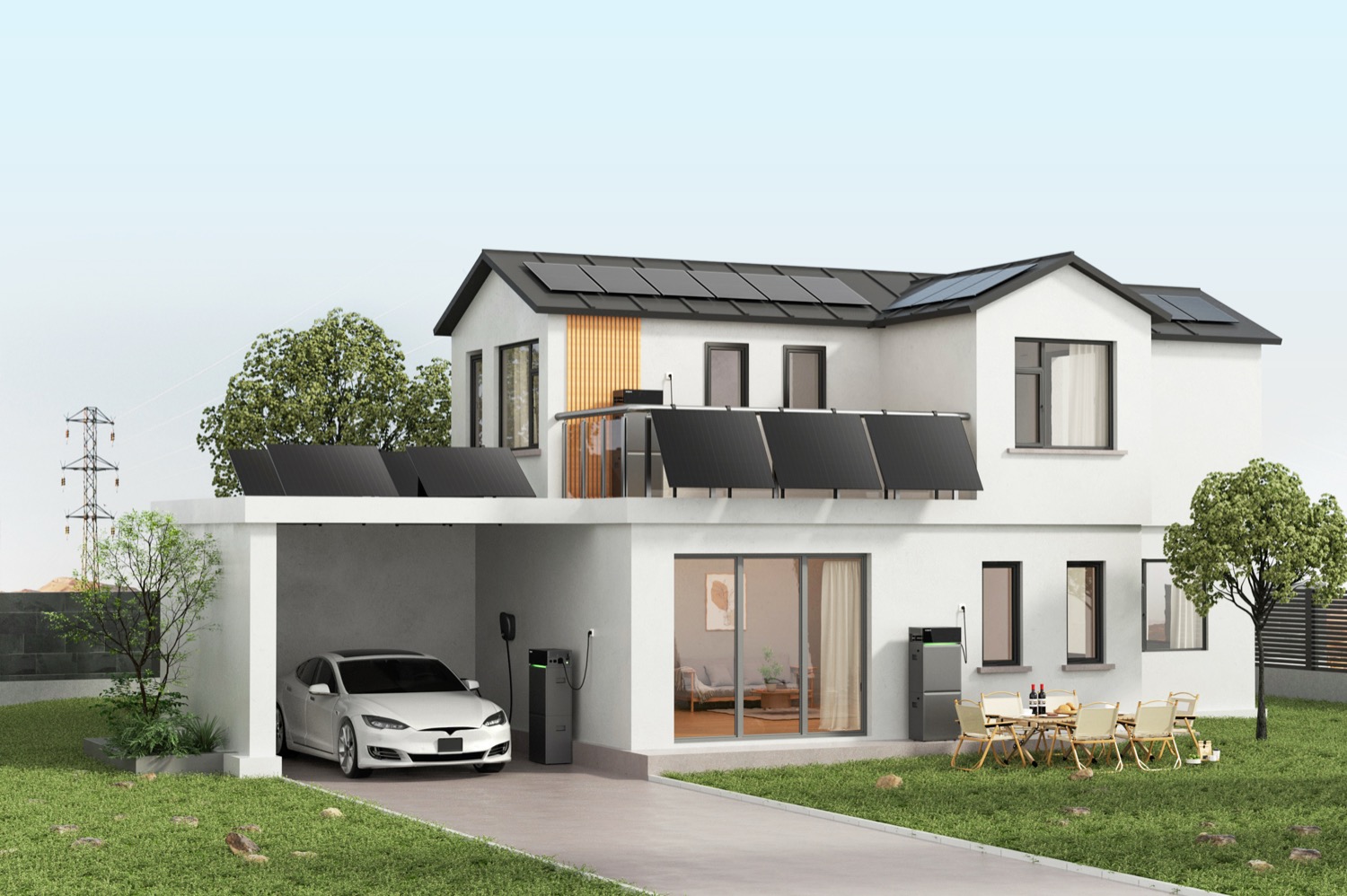
The short answer
A hybrid inverter is an inverter that can manage three power sources at once: your solar panels, a battery, and the grid. It converts DC to the AC your home uses, decides when to charge or draw from the battery, and can keep essential circuits running when the grid drops. It is the “brain” of a solar-plus-storage system. An all-in-one battery goes one step further by building that hybrid inverter into the battery unit itself.
What a hybrid inverter does
- Combines solar, battery and grid in one device, instead of separate solar and battery inverters.
- Prioritises intelligently: use solar first, store the surplus, draw from the battery at peak tariff times, and fall back to the grid only when needed.
- Provides backup: many hybrid inverters keep selected circuits live during an outage.
Hybrid inverter vs all-in-one
A standalone hybrid inverter still needs a separately chosen, compatible battery, plus wiring between the two and two warranties to track. An all-in-one unit combines the hybrid inverter, the battery and the management systems in a single stackable product. Fewer parts to match, one warranty, and usually a quicker install. For the trade-offs from an installer’s angle, see all-in-one vs components.
Do you need one?
- Building or upgrading a solar system: a hybrid approach (or an all-in-one hybrid model such as the Sunpura S2400 or S4800) lets you add storage cleanly.
- You already have solar and a working inverter: you may not need a new hybrid inverter at all. An AC-coupled battery adds storage without replacing it.
FAQ
Is a hybrid inverter the same as an all-in-one battery? No. A hybrid inverter is a device you pair with a battery. An all-in-one builds the hybrid inverter and battery into one unit.
Can a hybrid inverter run my home off-grid? It can run selected circuits from the battery during an outage. True whole-home off-grid depends on your loads and battery size, which your installer sizes.
See how Sunpura builds the inverter in: the all-in-one guide and the product range.